

So ... Why Is Everyone Talking About Open USD?
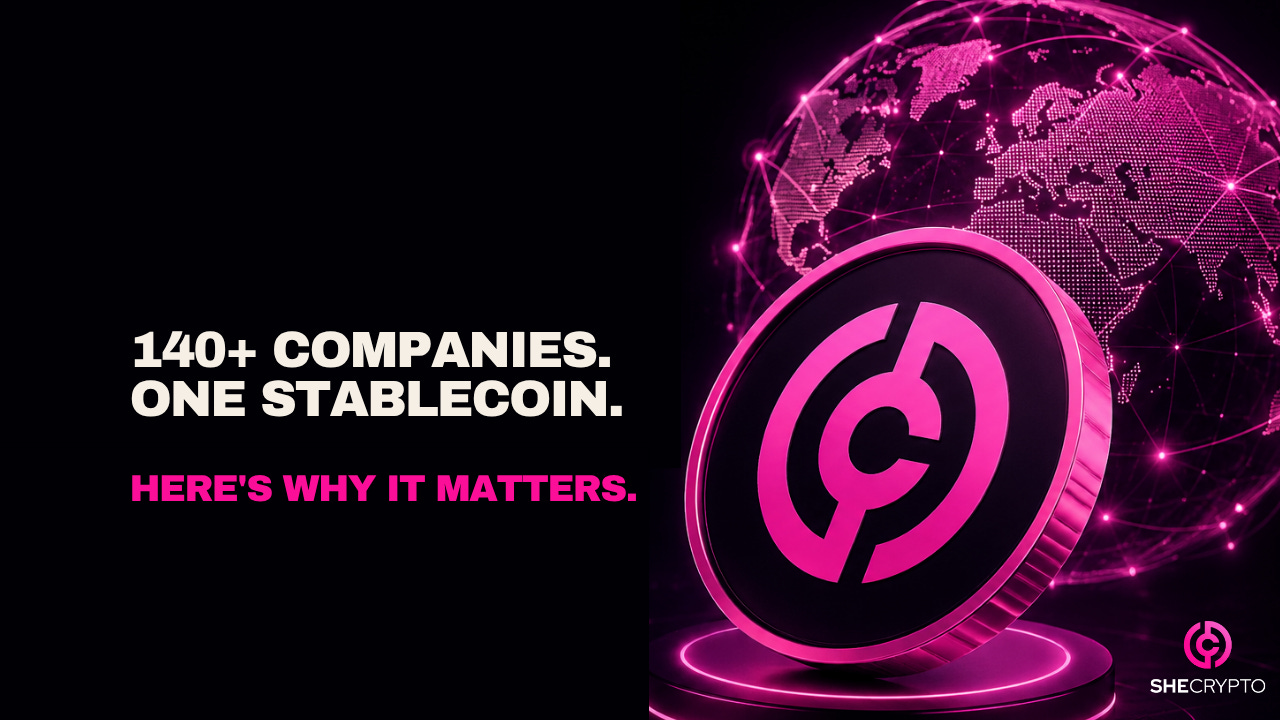
More than 140 companies—including Visa, Mastercard, BlackRock, Coinbase and Solana—are backing a new approach to stablecoins. Here's what's going on.

Every once in a while, something gets announced that makes me stop scrolling.
This week, that was Open USD, or, a the cool kids on X are calling it … OUSD.
On Tuesday, June 30, Open Standard announced a new U.S. dollar-backed stablecoin. My first thought? Okay ... another stablecoin.
Then I started digging in.
The more I read, the more I realized this isn’t just another company launching another digital dollar. The model itself is trying to do something different, and that’s why so many people across crypto are paying attention.
Here’s what stood out to me. ⬇️
Instead of one company issuing the stablecoin and keeping most of the revenue generated from the reserves, Open USD is being built as a shared ecosystem. After a small fee to cover operations, the interest earned on those reserves is designed to flow back to the companies using and growing the network.
Governance is shared, too.
Open Standard operates the project independently, but its partners have seats on the board. That’s a very different approach than we’ve seen from most of the major stablecoin issuers.
And there are already a lot of partners.
More than 140 companies have signed on, including Visa, Mastercard, Stripe, BlackRock, BNY, Coinbase, Solana, and many others across payments, banking, and crypto. This is not a list you ignore.
What also caught my attention is that Open USD isn’t positioning itself primarily as another trading asset. The focus is payments and moving money globally. Minting and redeeming OUSD will be free, there won’t be artificial volume caps, and the goal is to create infrastructure businesses can actually use to build.
The network isn’t live yet. It’s expected to launch later this year, beginning on Solana, with Base and Stellar planned to follow.
Why I Think This Is Worth Watching
For years, the stablecoin market has largely been dominated by Tether (a.k.a. USDT).
Like most issuers, Tether keeps the majority of the revenue generated from the reserves backing its stablecoin. That’s been the standard model across much of the industry.
Open USD is asking a different question: What happens if the economics are shared?
The companies helping grow the ecosystem also participate in the returns generated by the reserves. Whether that ultimately works remains to be seen, but I appreciate seeing teams experiment with new incentive structures instead of simply copying what’s already been done.
Why It Matters Beyond Stablecoins
One thing I find myself thinking about more and more is who gets to help build the next generation of financial infrastructure.
At SheCrypto, we talk constantly about creating more access, more education, and more opportunities for people who haven’t always had a seat at the table.
When governance and incentives are shared instead of concentrated, there’s at least the possibility for more builders, more startups, more global participation, and, hopefully, more women helping shape the future of finance from the beginning rather than being invited in later.
Will Open USD accomplish all of that?
No one knows yet.
But I like seeing projects challenge assumptions instead of accepting that things have to work the way they always have.
What I’ll Be Watching
Now comes the real test.
Will major payment companies actually integrate it?
How transparent will reserve management and governance be?
Will the shared yield model change how companies decide which stablecoin to support?
The announcement alone sparked a lot of conversation across the industry. While it’s difficult to attribute market moves to any one event, Circle’s (CRCL) stock was closely watched following the news as investors weighed what Open USD could mean for the future of stablecoins.
Note: Circle is the company behind USDC, the second-largest stablecoin in the world. Open USD is a separate project and is widely viewed as a potential competitor to Circle’s business model.
Also worth noting (NFA): Cathie Wood’s Ark Invest purchased approximately $17.8 million of Circle (CRCL) stock around the same time the stablecoin conversation heated up. While that doesn’t necessarily mean the purchase was driven by Open USD, it does suggest institutional investors continue to see opportunity in the stablecoin space.
My takeaway? We may be entering the beginning of some friendly stablecoin wars. Instead of competing only on trust and liquidity, projects are starting to compete on economics, partnerships, governance, and distribution. That’s a much more interesting story than simply launching another digital dollar.
Whether Open USD becomes a major player or not, I think it’s an important reminder that crypto is still evolving. We. Are. Still. Early. The infrastructure we’re going to rely on over the next decade is being built right now, and conversations like this help shape where it’s headed.
I’d love to hear what you think. Is the consortium model the future of stablecoins, or do you think the traditional issuer model still makes more sense?
Talk soon!
Best,
Kelly Ann Collins
Note: All SheCrypto content is for informational and entertainment purposes only. Not financial advice. Always DYOR.